Artist Residency - Earth Immersion
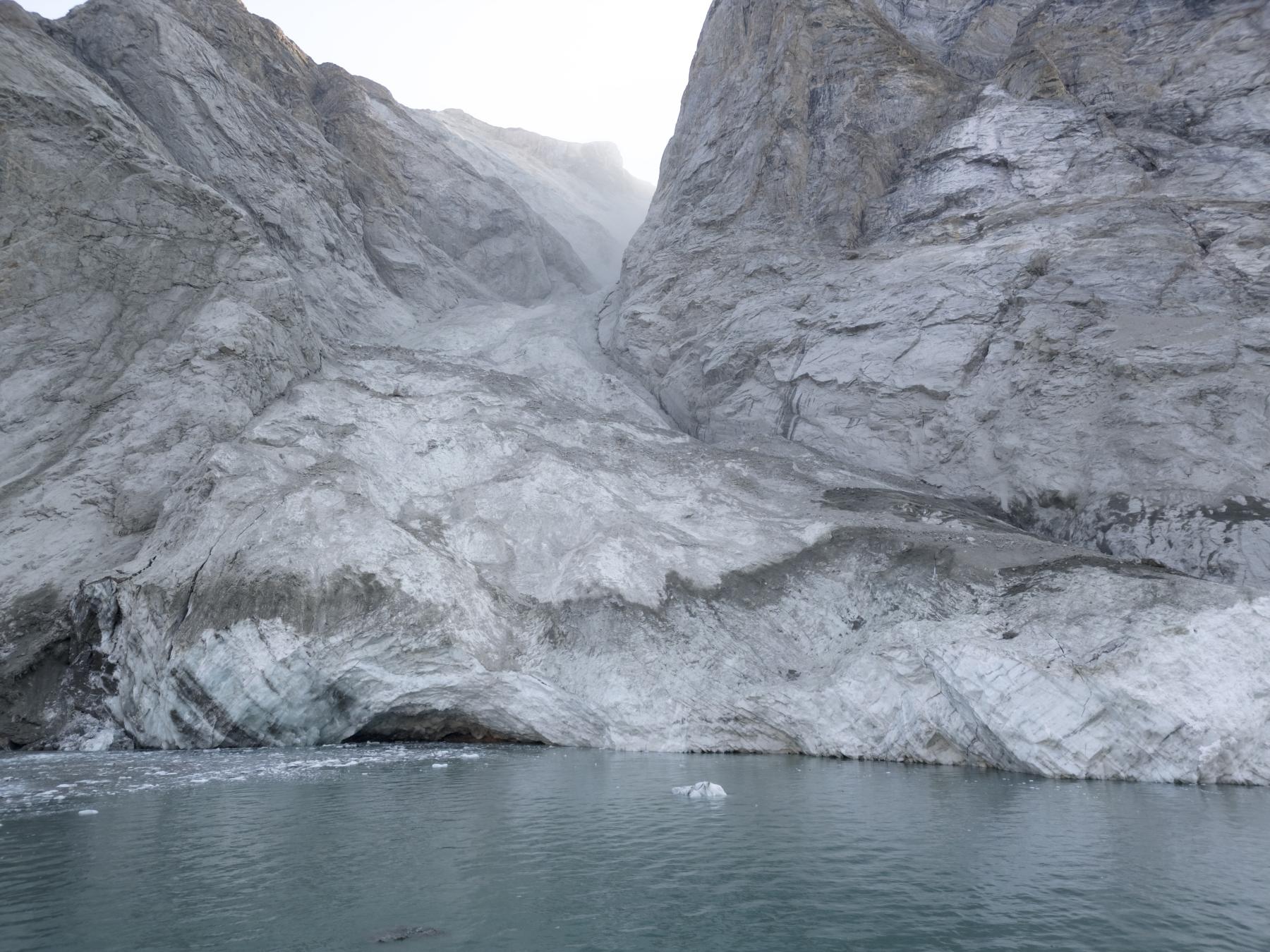
Image: Dickson Glacier, 2024 © Søren Rysgaard
Earth Immersion: Trembling Planet offers one artist, designer or maker working with sound the opportunity to undertake a residency exploring spatial sound in relation to seismology, climate and discharge‑related acoustics. The residency is part of Futures of Listening and organised in collaboration with the Royal Netherlands Meteorological Institute (KNMI).
Due to climate change, major landslides, ice‑breakoff events from glaciers that end in the ocean, and sound‑producing ice movements from land‑based glaciers are becoming more common. These events generate vibrations and movements of large volumes of air — infrasonic — inaudible to humans, sometimes spreading across the entire planet and into the atmosphere. This residency asks how immersive sound techniques can make these events tangible, thereby developing meaningful sonic narratives. It is also investigates how artistic research might explore relationships with other ecological influences brought about by these vibrations.
As a resident, you will work with scientific data relating to seismological events, vibrations, infrasound and the movement of land and ice masses, supported by scientific expertise from KNMI and artistic guidance from the Futures of Listening team. You will have the opportunity to incorporate data and relevant textual knowledge into your research and the creation of an art‑science spatial sound piece, relating local events to global impact.

Research Questions
Applicants should position their proposal in relation to one or more of the following questions:
How can immersive sound cultivate situated ways of listening to ecological processes and more-than-human encounters?
How can artistic and scientific methods of working with environmental data and knowledge inform each other within spatial sound creation?
What kinds of situated and critical understanding can immersive sound support in relation to planetary climate systems and biodiversity through diverse modes of sensory engagement, by rendering them audible in space, time, and place?
What is gained, lost, or ethically at stake when environmental sounds are translated, interpreted, or reconstructed through spatial and synthetic means?
Possible research directions include seismic acoustics, infrasound translation, climate‑related sonic phenomena, art‑science storytelling, environmental listening, planetary vibration studies and immersive ecological narratives.
Research Team
Lead Researcher & Scientific Partner: KNMI - Jelle Assink
Futures of Listening Researcher: Minji Kim - Ph. D, ACPA, Leiden University
Research Support: Jarl Schulp - Artistic Director of FIBER
Residency Outcomes
Residents will conduct art‑science research into the residency topic, bringing together scientific knowledge, data and materials with artistic, sonic storytelling. The residency encourages speculative, interdisciplinary and practice‑based research that contributes to the broader Futures of Listening programme.
Outcomes may include spatial sound productions, immersive installations, data‑driven sonic works, audiovisual pieces, software prototypes, reusable methodologies or other contributions that expand how seismic and climatic phenomena can be experienced and understood through sound.
Residents are expected to create a final spatial sound production, using the 4DSOUND system. Collaboration with KNMI scientists may support data interpretation or contextualisation.
The residency is partially self-hosted, partially at the 4DSOUND studio in Amsterdam, and partially at KNMI in De Bilt (near Utrecht).
Compensation
The total residency fee is €7.125, consisting of 25 commissioned days at a day rate of €285. Out of those 25 days, 6 days can be spent at the 4DSOUND studio, collaborating with their team.
There is space for some additional financial support if needed (incl. material costs or travel costs). These costs need to be clearly defined and agreed on before the start of the residency.
Who can apply
We invite sound artists, designers, composers, creative technologists and practitioners working with art‑science approaches or sonic storytelling. Applicants should demonstrate experience with sound‑based practice and explain how their proposal engages with the residency’s thematic context.
Experience working in art‑science environments is welcome but not required. Applicants may describe previous art‑science experience or explain why working in such an environment would benefit their practice.
Applicants must be based in the Netherlands and registered as an artist with the Dutch Chamber of Commerce (KvK).
More general info about the residency, like financial compensation and support, can be found here.
Selection Committee
Aimée Theriot (4DSOUND & Futures of Listening)
Allegra Greher (FIBER & Futures of Listening)
Jarl Schulp (FIBER & Futures of Listening)
Jelle Assink (KNMI)
Minji Kim (Futures of Listening Researcher)
Robin Koek (Futures of Listening)
APPLY NOW
This open call closes on 13 September 2026.